Why Should I Change If My Spouse Won’t? How keeping score can quietly keep your marriage stuck
There’s a sentence that comes up in couples therapy more often than you might think:
“Why should I change when they aren’t changing?”
And honestly, I get it.
When you feel like you’ve been the one trying, explaining, asking, reminding, apologizing, planning date nights, initiating conversations—or simply trying to get your partner to understand why something matters to you—the idea of doing more can feel ridiculous.
Why should I communicate differently when they still shut down?
Why should I be more affectionate when I don’t feel appreciated?
Why should I stop criticizing when they keep doing the exact thing I’ve asked them not to do?
Why should I go first?
These are fair questions.
But they can also become the exact questions that keep a relationship stuck.

Marriage Can Quietly Become a Scoreboard
Most couples don’t wake up one morning and decide to disconnect.
It usually happens slowly.
One person stops doing something because the other person stopped doing something.
“I stopped initiating because I was tired of being rejected.”
“I stopped asking because she always seemed annoyed.”
“I stopped telling him things because he didn’t seem interested.”
“I stopped being affectionate because I didn’t feel emotionally connected.”
“I stopped trying because nothing changed anyway.”
And eventually both people are sitting on opposite sides of the relationship waiting for the other person to make the first move.
The problem is that both people usually have evidence supporting their side.
That’s what makes this so difficult.
Two Things Can Be True at the Same Time
One of the most important things couples can learn is that two experiences can exist at once.
You can feel ignored and your partner can feel criticized.
You can feel controlled and your partner can feel insecure.
You can feel lonely and your partner can feel like nothing they do is good enough.
You can need more communication and your partner may genuinely not know how to have the conversation you’re asking for.
Understanding your partner’s experience doesn’t mean yours becomes less important.
It means we stop trying to determine who is right long enough to understand what is happening between you.
That shift matters.
The Question I’d Rather Couples Ask
Instead of:
“Why should I change if they won’t?”
Try:
“What part of this pattern belongs to me?”
Not because everything is your fault.
Not because you should tolerate disrespect, betrayal, abuse, manipulation, or unhealthy behavior.
And definitely not because one person can single-handedly repair a relationship.
But because your behavior is the part you actually have control over.
Maybe your partner shuts down during conflict.
But what happens right before they shut down?
Maybe you pursue harder.
Maybe you repeat the question.
Maybe your voice gets louder.
Maybe you start using words like always and never.
Maybe they shut down, which makes you pursue even harder.
Now you’re no longer dealing with one person’s behavior.
You’re dealing with a pattern.
And patterns are where some of the most meaningful work in couples therapy happens.
Going First Doesn't Mean Losing
This is where marriage can get uncomfortable.
Sometimes being emotionally mature means doing something different before you know whether your spouse will meet you there.
It might sound like:
“I can see that I came into that conversation pretty aggressively. Can we try again?”
Or:
“I’m angry, but I don’t want to say something just to hurt you. I need a few minutes.”
Or even:
“I know we see this differently. I want to understand your side before I defend mine.”
That's not weakness.
That's not admitting the other person is right.
That's choosing not to keep feeding a pattern that isn't working.
And yes—your partner has responsibility too.
Healthy relationships require reciprocity. If only one person is willing to reflect, communicate, repair, or make changes indefinitely, that becomes a different conversation.
But somebody has to interrupt the cycle.
Before Your Next Argument, Ask Yourself This
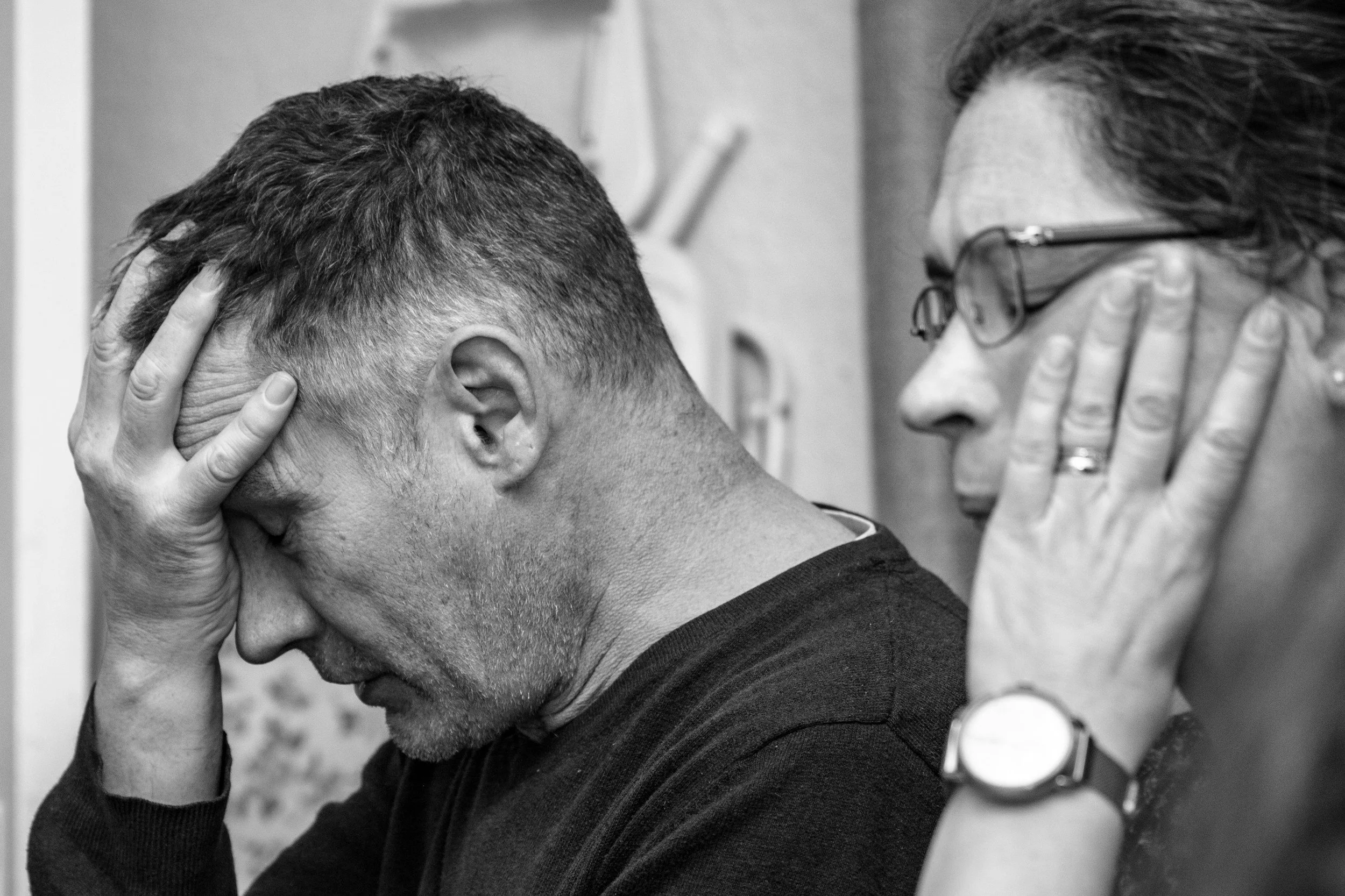
The next time you feel yourself thinking, Why should I when they don't?, pause for a second.
Ask yourself:
What am I actually needing from my partner right now?
Then ask:
Have I communicated that need clearly—or have I mostly communicated my frustration about not getting it?
Those are very different conversations.
“I need you to stop being so selfish” feels very different from:
“I've been feeling pretty alone lately, and I miss feeling like we're a team.”
One invites defense.
The other creates an opportunity for connection.
It doesn't guarantee you'll get the response you want.
But it changes what you bring into the conversation.
Your Marriage Doesn't Need a Winner
If one person has to lose for the other person to feel heard, eventually the relationship loses.
Marriage isn't supposed to be a competition over who worked harder, who apologized last, who hurt whom more, or whose version of the argument is technically correct.
Sometimes the better question isn't:
“Who's right?”
It's:
“What's happening to us when we do this?”
That’s often where the real conversation begins.
And if you and your partner keep having the same argument with different details—or you’re starting to feel more like roommates, opponents, or coworkers than partners—it may be worth getting some help understanding the pattern underneath it.
You don't have to wait until your relationship is falling apart to work on it.
Sometimes you just need a different conversation.
Heart to Heart Therapy Co.
Real Life. Real Tools. Real Conversations.
Individual & Couples Therapy | In-Person & Virtual
New Lenox, Illinois
Christian-based therapy available upon request.
This article is for educational purposes and is not a substitute for individualized mental health care.